

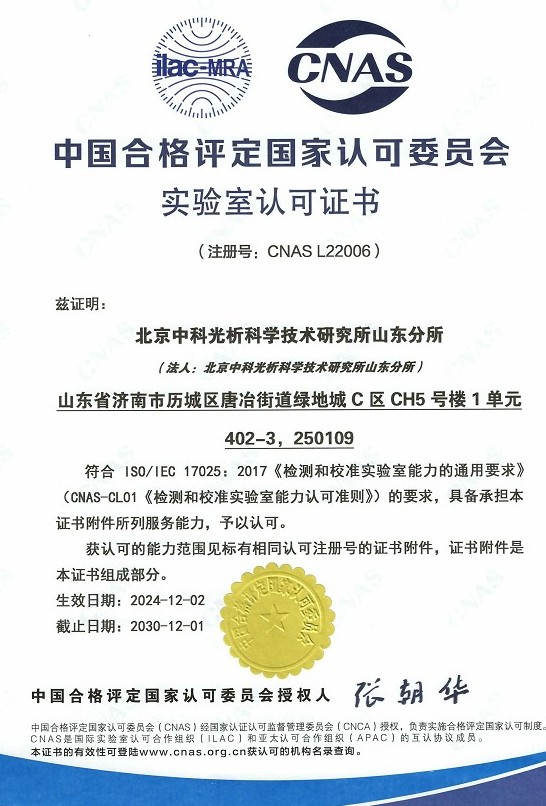


本文主要介绍了关于医用加速器的相关检测项目,检测项目仅供参考,如果您想针对自己的样品让我们推荐检测项目,可以咨询我们在线工程师为您服务。
1. Beam Energy: This test measures and verifies the energy of the radiation beam produced by the medical accelerator. It is important to ensure that the beam energy matches the prescribed treatment plan.
2. Beam Profile: This test examines the shape and symmetry of the radiation beam to ensure that it is appropriately shaped and evenly distributed, as intended for accurate treatment delivery.
3. Dose Rate: This test measures the rate at which radiation is delivered during treatment to ensure it matches the prescribed dose rate for each patient. Consistent dose rates are essential for effective treatment outcomes.
4. Linearity of Output: This test evaluates the relationship between the input and output radiation dose to ensure that it is linear. Linearity is crucial to accurately deliver radiation doses as planned.
5. Symmetry and Flatness: This test measures the symmetry and flatness of the radiation beam across the treatment field. It is important to ensure that the dose distribution is uniform and consistent.
6. Crossline and Inline Profiles: This test measures the radiation beam intensity across the crossline and inline directions to verify the conformity of the beam shape and intensity profiles.
7. Output Factors: This test determines the correlation between the radiation output and the actual dose delivered to the patient, accounting for factors such as different field sizes and beam modifiers.
8. Radiation Field Size: This test measures the accurate size of the radiation field and confirms that it matches the intended treatment field size. Accurate field size is essential for proper treatment planning.
9. Treatment Time: This test verifies the accuracy of the treatment time delivered by the medical accelerator. It ensures that the prescribed treatment time matches the actual time taken to deliver the radiation dose.
10. Collimator and Multileaf Collimator (MLC) Positioning Accuracy: This test assesses the accuracy of the collimator and MLC positioning to ensure that the radiation beam is shaped precisely according to the treatment plan.
11. Interlocks Verification: This test checks the functionality of safety interlocks in place to protect patients and operators. It ensures that the accelerator does not operate if any safety parameters are not met.
12. Isocenter Accuracy: This test confirms the accuracy of the isocenter, the point where the radiation beams intersect, to ensure precise targeting of tumors during treatment.
13. Electronic Portal Imaging Device (EPID) Quality Assurance: This test assesses the performance of the EPID system, which captures images during treatment, to ensure accurate patient positioning and proper radiation dose delivery.
14. Comprehensive Machine QA: This involves a series of tests to evaluate all aspects of the medical accelerator's performance, including beam output, energy, symmetry, and safety interlocks.
15. Dosimetric Leaf Gap: This test determines the gap between the leaves of the MLC, which can affect the accuracy of the radiation beam shape and dose delivery. It ensures the proper functioning of the MLC.
16. Couch Sag Assessment: This test checks the accuracy and precision of the couch sag, which can impact patient positioning during treatment. It confirms proper functionality of the couch system.
17. Imaging System Calibration: This test ensures the accuracy and calibration of the imaging system used for treatment verification and patient positioning, such as cone-beam CT or onboard imaging.
18. Data Transfer Integrity: This test verifies the integrity and accuracy of data transfer from treatment planning systems to the medical accelerator, ensuring that the correct treatment parameters are implemented.
19. Patient-Specific QA: This involves the verification of treatment plans for individual patients to ensure proper beam delivery and dosage according to the specific treatment plan.
20. Field-Output Factor Measurements: This test quantifies the relationship between monitor units (MU) delivered and doses received to verify the accuracy of the output factors for different field sizes and shapes.
21. MLC Interdigitation: This test examines the accuracy of the MLC leaves' interdigitation patterns to ensure that there is no significant leakage of radiation between adjacent leaves during treatment.
22. Field Homogeneity: This test evaluates the homogeneity of the radiation field to ensure that there are no variations or hotspots, which could lead to inadequate or excessive radiation doses.
23. Jaw Positioning Verification: This test confirms the accuracy of the jaw position used to shape the radiation field. It ensures that the jaws are positioned correctly according to the treatment plan.
24. Constancy: This test assesses the stability and constancy of the medical accelerator's performance over time. It ensures that the machine's output remains consistent for reliable treatment delivery.
25. Energy Stability and Linearity Verification: This test examines the stability and linearity of the energy output produced by the medical accelerator, ensuring that there are no fluctuations or variations over time.
26. Radiation Leakage: This test measures the level of radiation leakage from the accelerator's shielding, ensuring that it is within acceptable limits to protect patients and operators.
27. Dose Calculation Accuracy: This test evaluates the accuracy of the dose calculation algorithms used by the treatment planning system to ensure that the calculated dose matches the delivered dose.
28. Safety Systems Check: This test verifies the functionality of various safety systems, such as radiation monitors and emergency shut-off switches, to ensure patient and operator safety during treatment.
29. Daily Warm-Up and Output Checks: This involves daily warm-up and output checks to ensure the stability and consistency of the radiation beam before treating patients.
30. Quality Assurance (QA) Software Verification: This test confirms the accuracy and functionality of the quality assurance software used to analyze and report the results of the machine tests.
31. Image Registration Accuracy: This test evaluates the accuracy of image registration techniques used for treatment planning and patient positioning, ensuring precise alignment of images.
32. Surface Dose Measurements: This test measures the dose received by the patient's skin surface during treatment to ensure that it falls within safe limits and avoids potential skin reactions.
33. Mechanical and Electrical Safety Checks: This test assesses the mechanical and electrical safety of the medical accelerator, including checks of electrical connections, grounding, and proper functioning of mechanical components.
34. Electron Beam Profile: This test measures and verifies the shape and symmetry of the electron beam produced by the accelerator, ensuring accurate delivery of electron beam treatments.
35. Radiation Isocenter Shifts Verification: This test detects any shifts in the radiation isocenter position over time, ensuring that the delivery accuracy remains consistent throughout the course of treatment.
36. Field-Size Determination Accuracy: This test verifies the accuracy of field-size determination, ensuring that the size of the radiation field matches the intended treatment field size.
37. Treatment Couch Indexing and Interlocking Verification: This test confirms the accuracy and functionality of the treatment couch indexing and interlocking mechanisms, ensuring proper alignment and safety during treatment.
38. Imaging System Alignment: This test checks the alignment of the imaging system with the radiation beam and treatment isocenter, ensuring accurate imaging for treatment verification and patient setup.
39. Output Calibration: This test verifies the accuracy of the accelerator's output calibration to ensure that the delivered radiation doses match the prescribed values.
40. Mechanical Stability: This test assesses the mechanical stability of the medical accelerator, including gantry movement, collimator rotation, and couch positioning, to ensure smooth and precise operations during treatment.
41. Safety Interlocks and Alarms: This test checks the functionality of safety interlocks and alarms that provide warnings or respond to abnormal conditions during accelerator operation.
42. Dose Output Stability: This test verifies the stability of the accelerator's dose output over time, ensuring that the delivered radiation doses remain consistent within acceptable tolerances.
43. MLC Positional Accuracy: This test evaluates the positional accuracy of the MLC leaves to ensure that the intended field shape and modulation are accurately delivered during treatment.
44. Imaging Dose: This test measures the dose delivered by the imaging system used during treatment verification, ensuring that it is minimized while still providing sufficient image quality for accurate positioning.
45. External Beam Quality Assurance: This comprehensive test evaluates the overall performance and accuracy of external beam treatments delivered by the medical accelerator, encompassing various aspects of QA.
46. Scanning Beam Stability: This test assesses the stability and consistency of the scanning beam delivery system for treatments requiring precise and selective radiation targeting.
47. Portal Imaging Dose: This test measures the dose delivered by the portal imaging system, which captures images during treatment, to ensure that it falls within acceptable limits and does not contribute significantly to the total dose.
48. Small Field Dosimetry: This test examines the accuracy and reliability of dose delivery for small-sized treatment fields, which are commonly used in advanced radiotherapy techniques.
49. Treatment Delivery Accuracy: This test evaluates the overall accuracy of treatment delivery by comparing the planned dose distribution with the measured dose distribution in a phantom or patient for specific treatment techniques and beam arrangements.
50. Shielding Integrity: This test ensures the integrity and effectiveness of the accelerator's radiation shielding, which is designed to minimize radiation exposure to staff and other individuals outside the treatment room.