本文主要介绍了关于饰品的相关检测仪器,检测仪器仅供参考,如果您想了解自己的样品需要哪些检测仪器,可以咨询我们在线工程师为您服务。
1. Mass spectrometer: A mass spectrometer is an instrument used to identify the chemical composition of a sample by measuring the mass-to-charge ratio of ions.
2. Gas chromatograph: Gas chromatography is a technique used to separate and analyze volatile compounds in a sample, employing a combination of gas flow, temperature, and different stationary phases.
3. High-performance liquid chromatograph: High-performance liquid chromatography (HPLC) is a method used for separating and analyzing compounds dissolved in a liquid sample using high-pressure pumps and specialized columns.
4. Atomic absorption spectrometer: An atomic absorption spectrometer is an instrument used to determine the concentration of specific elements in a sample by measuring the absorption of light at different wavelengths.
5. Fourier transform infrared spectrometer: Fourier transform infrared spectroscopy (FTIR) is a technique used to analyze the molecular composition of a sample by measuring the absorption of infrared light at different frequencies.
6. Scanning electron microscope: A scanning electron microscope (SEM) is a type of electron microscope that produces high-resolution images of the sample surface by scanning it with a focused beam of electrons.
7. X-ray diffractometer: X-ray diffraction (XRD) is a technique used to analyze the crystal structure of a sample by measuring the diffraction pattern of X-rays that are scattered off the sample.
8. Inductively coupled plasma mass spectrometer: Inductively coupled plasma mass spectrometry (ICP-MS) is a method used for elemental analysis and quantification, based on the ionization of a sample in an inductively coupled plasma and subsequent mass spectrometry detection.
9. Nuclear magnetic resonance spectrometer: Nuclear magnetic resonance (NMR) spectroscopy is a technique used to analyze the molecular structure and dynamics of a sample based on the interaction of atomic nuclei with a strong magnetic field and radiofrequency radiation.
10. Ultraviolet-visible spectrophotometer: Ultraviolet-visible (UV-Vis) spectrophotometry is a technique used to measure the absorption or transmission of ultraviolet and visible light by a sample, often used for quantitative analysis of compounds.
11. Thermogravimetric analyzer: A thermogravimetric analyzer (TGA) measures the weight change of a sample as a function of temperature, providing information about its thermal stability and composition.
12. Differential scanning calorimeter: Differential scanning calorimetry (DSC) measures the heat flow into or out of a sample as a function of temperature, allowing for the determination of phase transitions, thermal stability, and heat capacity.
13. Electrochemical analyzer: An electrochemical analyzer measures the electrical properties of a sample, such as conductivity, impedance, and electrochemical reactions, used in various applications including batteries and corrosion studies.
14. Particle size analyzer: A particle size analyzer determines the size distribution of particles in a sample, providing information on particle size, shape, and concentration.
15. Viscometer: A viscometer measures the viscosity or flow properties of a fluid, allowing for the characterization of its resistance to deformation or flow.
16. Rheometer: A rheometer measures the rheological properties of a sample, such as viscosity, elasticity, and flow behavior, providing information about its mechanical properties under different conditions.
17. Gas analyzer: A gas analyzer measures the composition and concentration of gases in a sample, often used for environmental monitoring, industrial safety, and combustion analysis.
18. Microplate reader: A microplate reader is used to measure the absorbance, fluorescence, or luminescence of samples in microplates, commonly used in various biological and biochemical assays.
19. High-speed centrifuge: A high-speed centrifuge is used to separate and purify components in a sample based on their different densities or sedimentation rates, often used in molecular biology, biochemistry, and biotechnology.
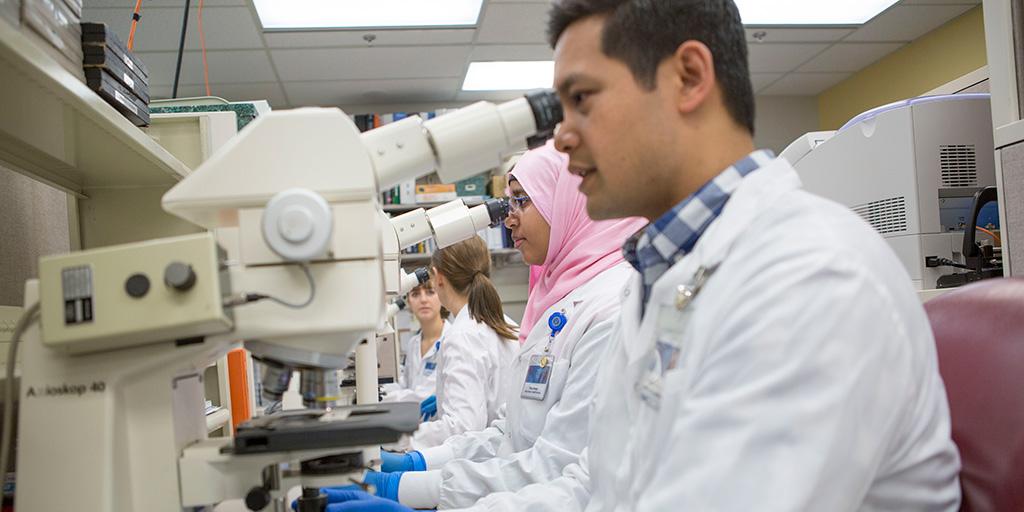
20. Microscope: A microscope is an optical instrument used to magnify and observe small objects or samples that are not visible to the naked eye, providing high-resolution images and allowing for detailed analysis.
21. Surface area analyzer: A surface area analyzer measures the specific surface area of a solid material, providing information about its porosity, adsorption characteristics, and catalytic properties.
22. Electron paramagnetic resonance spectrometer: Electron paramagnetic resonance (EPR) spectroscopy is a technique used to study paramagnetic species in a sample by detecting the absorption and emission of electromagnetic radiation at microwave frequencies.
23. UV-Vis-NIR spectrophotometer: A UV-Vis-NIR spectrophotometer measures the absorption or transmission of ultraviolet, visible, and near-infrared light by a sample, allowing for the analysis of a wider range of wavelengths.
24. High-performance thin-layer chromatography system: High-performance thin-layer chromatography (HPTLC) is a method used for separating and analyzing compounds in a sample using a thin layer of stationary phase and capillary action.
25. Fluorescence spectrometer: A fluorescence spectrometer measures the emission of fluorescent light from a sample when excited by specific wavelengths of light, often used in various biological and chemical analyses.
26. Capillary electrophoresis system: Capillary electrophoresis (CE) is a technique used to separate and analyze charged particles or molecules in a sample based on their electrophoretic mobility in a capillary filled with an electrolyte solution.
27. Gas chromatograph-mass spectrometer: A gas chromatograph-mass spectrometer (GC-MS) combines the separation capabilities of gas chromatography with the detection and identification capabilities of mass spectrometry, allowing for the analysis of complex mixtures.
28. Ion chromatograph: Ion chromatography is a technique used to separate and analyze ions in a sample based on their charge and affinity for the stationary phase, often used for the analysis of inorganic and organic ions in environmental and biological samples.
29. Ultrasonic cleaner: An ultrasonic cleaner uses high-frequency sound waves to remove dirt, contaminants, and particles from surfaces and objects, commonly used in laboratory cleaning applications.
30. Infrared microscope: An infrared microscope combines the functionality of a standard microscope with infrared spectroscopy, allowing for the mapping and analysis of samples based on their infrared absorption characteristics.